

September has arrived, which means we are officially back to school.
And this year feels a little different in my house.
I now have two high schoolers.
Amelia is a freshman, just beginning the whole high school experience.
Ella is a senior, which means we are somehow already talking about college, graduation and what comes next.
I’m still not entirely sure how this happened.
I’m pretty sure they were learning how to ride bikes about 20 minutes ago.
But here we are.
Backpacks packed. Schedules figured out. Soccer practices, school events, college applications and, of course, another lost water bottle. I think that brings the 12-year total to 1,042. Okay, maybe that’s an exaggeration. But not by much.
Having a freshman and a senior at the same time is a pretty good reminder that change can feel slow right up until it suddenly doesn’t. Markets are not much different. The big shifts usually look obvious only after they have already happened.
August Got a Passing Grade

August was another strong month for investors, even with plenty of uncertainty hanging around like San Francisco summer fog.
The S&P 500 gained 2.6%, the Nasdaq rose 3.9% and the Dow added 1.3%. Year-to-date, all three remain up double digits. International markets also participated, with developed international stocks gaining 1.8% and emerging markets rising 3%.
That happened despite higher interest rates, sticky inflation, tariff uncertainty, elevated oil prices and a softer jobs report.
In other words, markets once again showed they do not require perfect conditions to make progress.
Interest Rates Are Still the Hardest Class

The 30-year Treasury yield finished August around 5.24% and the 10-year ended near 4.75%, both close to multi-decade highs.
Higher rates create real challenges. Mortgages are more expensive, businesses face higher borrowing costs and stocks have more competition from bonds.
But higher rates are not automatically bad news.
Real, inflation-adjusted yields have improved alongside a still-growing economy and strong corporate earnings. And for investors, higher yields mean bonds are once again providing meaningful income, not just diversification.
That makes fixed income a much more useful part of a portfolio than it was when rates were near zero.
Yes, I’m Talking About Earnings Again
If you’ve read more than a few editions of The Broadcast, you already know what’s coming.
Earnings.
I know, I know. Broken record.
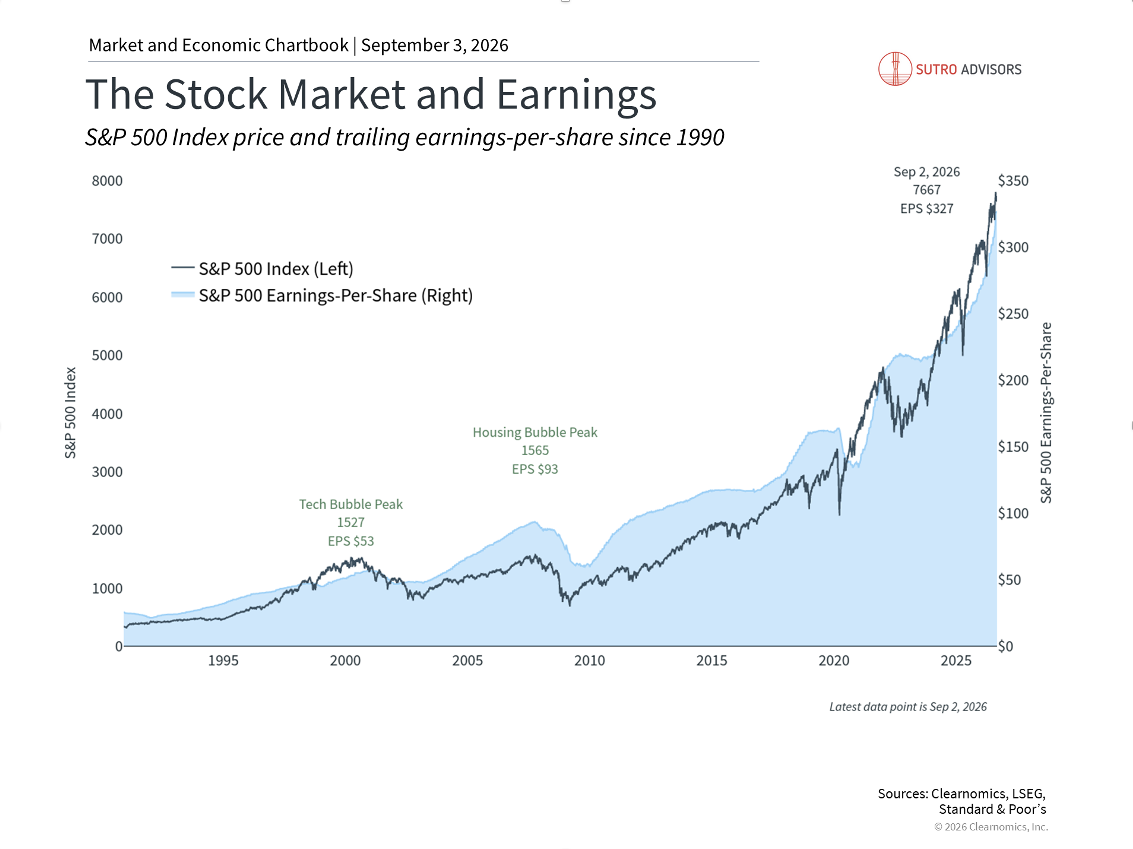
But there’s a reason I keep coming back to them: over the long run, corporate profits are what ultimately give stock prices something to stand on.
And August gave me another excuse to repeat myself.
The S&P 500 reached new all-time highs as second-quarter earnings came in well ahead of expectations. Even better, the strength wasn’t confined to a handful of giant technology companies. Ten of the eleven S&P 500 sectors reported year-over-year earnings growth, with nine posting double-digit gains.
That’s the part I find especially encouraging.
Interest rates, tariffs and Fed policy will continue to dominate the headlines. But underneath all that noise, companies are still doing the thing that matters most to investors:
Making more money.
AI: The Bigger Question Is Productivity
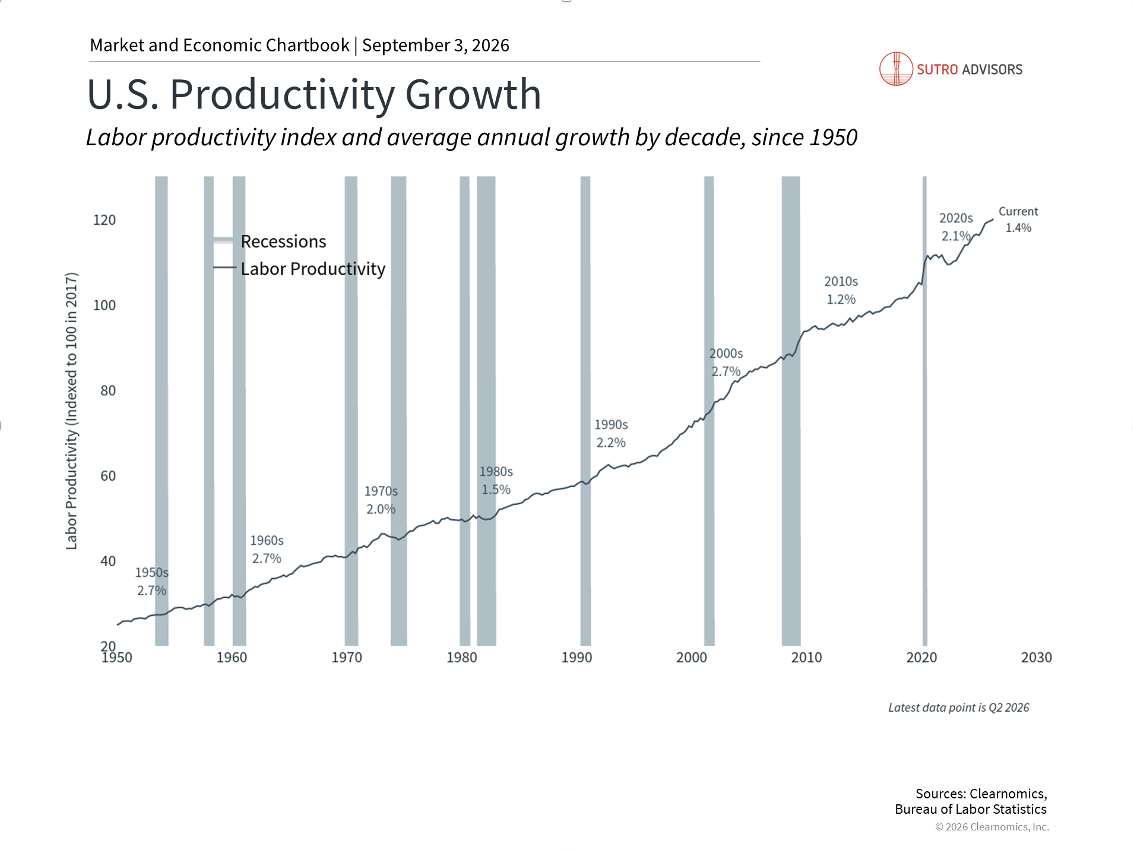
Artificial intelligence remains one of the biggest market stories, but I think the more important question is not which AI company wins.
It is whether AI makes people more productive.
I’ve seen a small version of that firsthand. AI has allowed me to “hire” an editor for this very newsletter. So if you’ve noticed fewer misspellings and hopefully, even fewer grammatical errors in The Broadcast, you now know why.
My editor works nights, weekends and holidays, never complains about deadlines and has yet to ask for a raise.
That (in a very small way) is what the productivity argument around AI is all about.
Productivity means producing more and more better work, with the same amount of time and resources. Over long periods, it is one of the most important drivers of economic growth and rising living standards.
Economist Paul Romer described growth as coming from “better recipes,” not simply doing more of the same.
AI can function as a tool, an assistant or a way to create entirely new processes. The computer and internet boom of the 1990s did not immediately transform productivity either. Companies had to adopt the technology, workers had to learn how to use it and business models had to adjust.
AI may follow a similar path.
The Fed Still Has a Difficult Assignment
If earnings are the most-written-about topic in The Broadcast, inflation has to be a close second.
Although, to be fair, most of that material is probably from the 2022 vintage.
Unfortunately, inflation is back for another appearance.
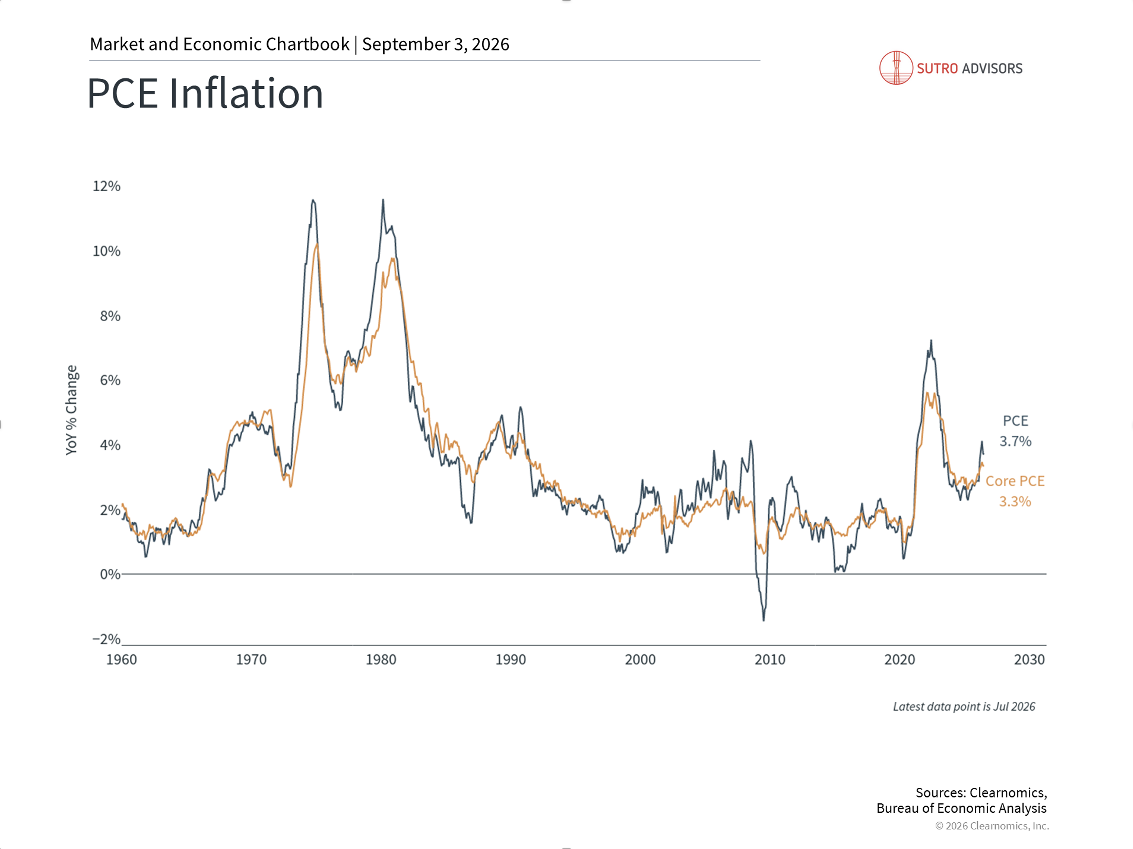
Headline PCE inflation was 3.7% year over year in July, while core PCE was 3.3%, both still well above the Fed’s 2% target.
At the same time, the labor market has started to cool. July payrolls declined by 23,000 versus expectations for an increase, although unemployment remained relatively low at 4.1%.
That leaves the Fed with the same difficult assignment we’ve talked about before: bring inflation down without unnecessarily damaging the job market.
Fed Chair Kevin Warsh signaled at Jackson Hole that another rate increase could arrive sooner than previously expected. Markets are now considering at least one additional hike this year and possibly another in early 2027.
Fortunately, we don’t need to correctly predict every Fed meeting.
We need portfolios that can function whether the next move is up, down or somewhere in between.
AI and Inflation May Eventually Meet
Technology tends to be deflationary over time.
If businesses can produce more with fewer resources, costs fall. If workers can accomplish more in the same amount of time, productivity rises.
If AI materially improves productivity, the economy could potentially support faster growth and higher wages without creating the same level of inflation.
That is why the long-term AI story may ultimately matter more than the Fed’s next decision.
One affects the next few months.
The other could influence the economy for decades.
Tariffs: Businesses Keep Adapting
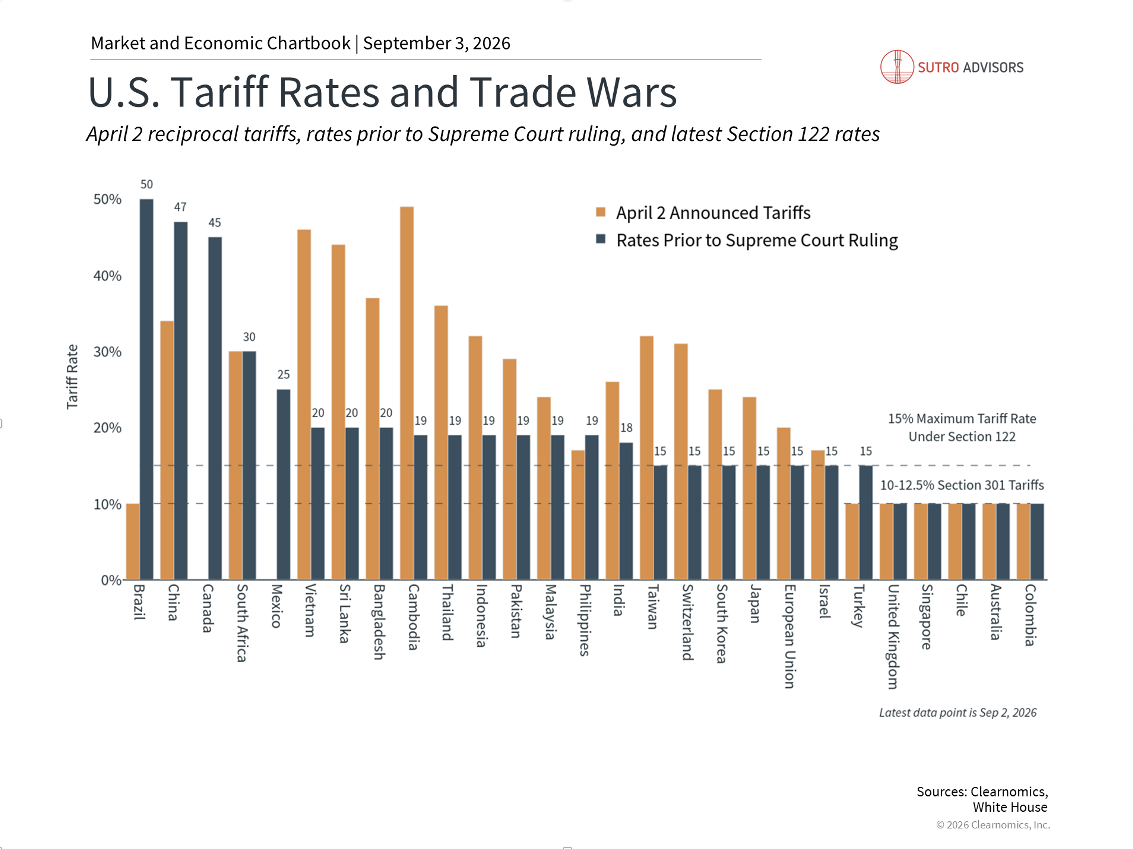
Trade policy remained messy in August.
Tariffs imposed under one set of rules were struck down, replaced by others and continued to create uncertainty for businesses.
Yet companies have continued to adapt by changing suppliers, adjusting prices and reworking supply chains. So far, many of the worst-case outcomes have not materialized. Corporate earnings remain strong and markets have continued moving higher.
That does not mean tariffs are harmless.
It means businesses adapt.
The Back-to-School Lesson
Having a freshman and a senior at the same time is a pretty good reminder of how quickly things can change when you’re not watching the clock.
Markets have been doing some version of this for a very long time. The risks change, the headlines change and the companies leading the way change too.
August was another good example. Higher rates did not stop stocks from rising. Tariffs did not stop companies from adapting. AI created plenty of uncertainty while also creating new opportunities. And through it all, earnings kept growing.
The future rarely looks exactly like we expect it to.
Fortunately, investing does not require us to get every prediction right.
It requires us to keep adjusting to the world as it actually unfolds.
Not a bad lesson for the start of a new school year.
Until next time, take good care!

