
Lately, as I’ve been reading the headlines, I keep thinking of one of Yogi Berra’s classic lines: “It’s like déjà vu all over again.”
Last month, I wrote about how San Francisco weather and financial news both love a good fake-out - just when you start reaching for a jacket, the sun comes out and the markets rally. Well, the government shutdown drags on, trade tensions with China have flared up again and pundits are debating whether the AI boom is the next great bubble. It’s the kind of doom loop the media loves, uncertainty makes for better clicks than patience.
But behind the noise, the numbers keep holding up. The S&P 500 rose 2.3% in October and earnings completed a full year of double-digit growth. Inflation eased to 3% and the Fed trimmed rates again to steady a "cooling economy. Bonds stabilized, gold set a new high, and markets quietly moved forward while everyone else argued about whether the end was near.
If that sounds familiar, look no further than the 6-3 49ers (sorry, couldn't help myself.) They’ve been grinding through injuries to star players Brock Purdy, Nick Bosa and Fred Warner, yet still keep stacking wins. Not every game is pretty - but the record matters more than the noise in between. Markets work the same way. The headlines may scream crisis, but earnings and fundamentals keep moving the ball downfield
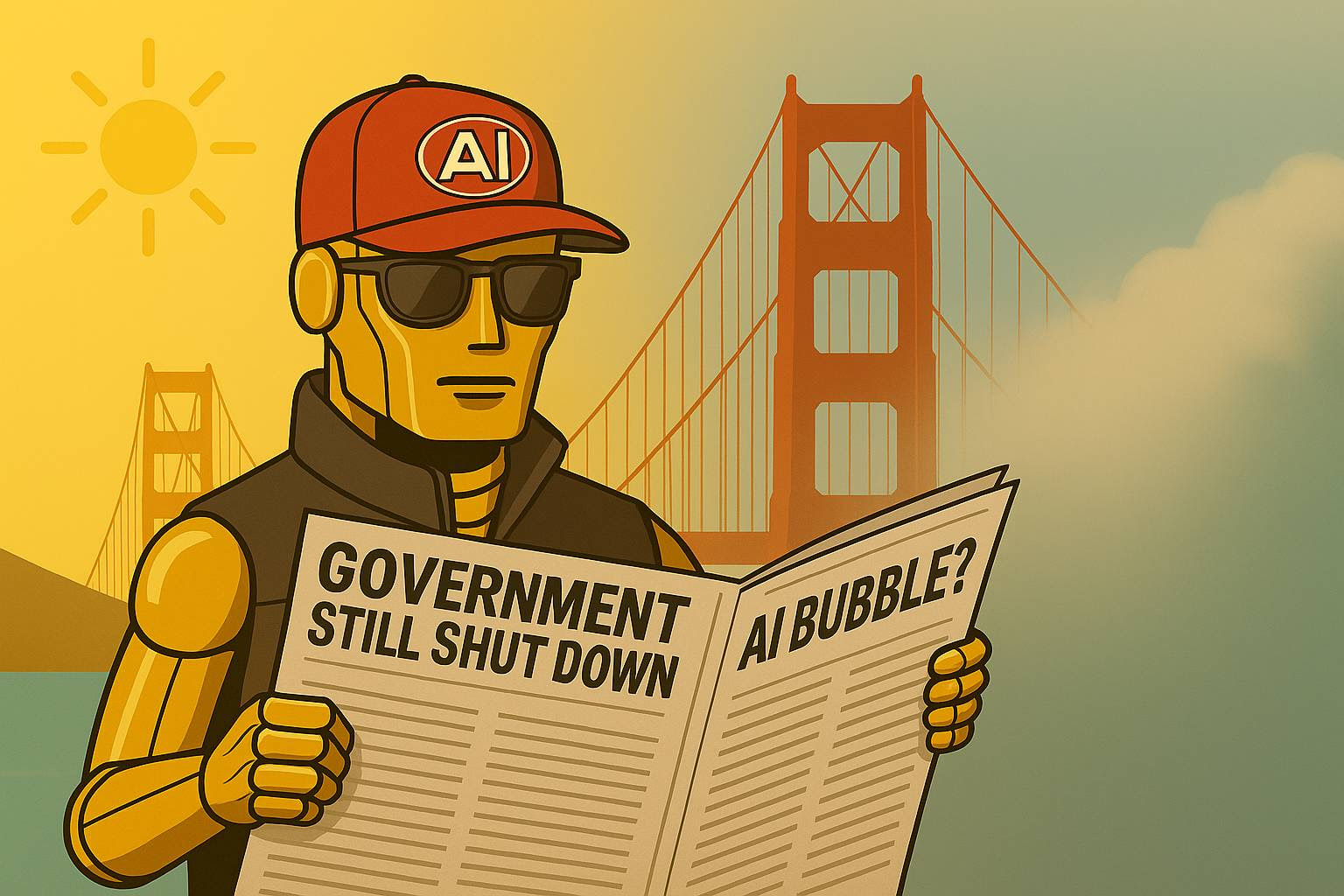
In an effort to get us out of this déjà vu timeline, I’m shaking things up a bit this month. Despite the familiar looking, newspaper reading AI robot pictured above, I’m adding a new section that covers a few real questions I’ve been getting lately (don’t worry - no local sports analogies…this time.)
1. How does the longest government shutdown in history affect investors?
Shutdowns always make front-page news, but they rarely leave lasting marks on markets. Federal workers and agencies feel real pain, yet history shows most spending simply gets delayed, not destroyed. The last record shutdown (back in 2019) ended with the S&P 500 up more than 30% for the year. These events typically create tension, not trend.
2. Why did the Fed cut rates in October?
The Fed lowered rates by 0.25 % to a range of 3.75–4.00 %, aiming to keep growth afloat while inflation cools and job creation slows. It’s a balancing act: support the economy without reigniting inflation. The Fed also plans to stop reducing its balance sheet in December, which means more liquidity flowing through the system - a subtle but powerful form of support.
3. Is there an AI bubble?
The question comes up a lot and as someone who started his career in the dot com days it’s more than fair. AI hype is everywhere, valuations are stretched, and the numbers are staggering. But not all hype is hollow. San Francisco itself is a case study: for the first time in years, there’s energy again. Sidewalk cafés are full, office space is getting leased and much of the buzz traces back to the AI buildout. The investment is real (data centers, chips, cloud infrastructure) and it’s driving both local growth and market earnings.
Still, not every company will be a winner, which is why diversification matters more than ever. Today’s AI leaders are profitable and cash rich, but cycles always test enthusiasm. The goal isn’t to chase the next revolution, it’s to position portfolios to benefit from innovation while staying resilient when excitement fades.
If this really is the déjà vu timeline, at least we know how it ends - markets growing, investors second-guessing and San Francisco catching a little sunshine before the holidays. It’s tempting to think we’ve seen it all before, but familiar patterns aren’t boring - they’re proof that progress rarely looks dramatic in real time. So whether it’s the economy, the 49ers or your own plans for the upcoming holiday season, stay patient, stay diversified and enjoy the stretch run.
Until next time, take good care!

