Higher Rates. New Highs. Go Figure.
Last month was all about heading back to school. Now that we’re a month in, everyone has settled into the routine - more or less.
And somehow I’ve made it this far without mentioning either baseball or football. Baseball may be easy to explain - the Giants did their best to make me forget the season happened. The Niners, meanwhile are 4-0 despite another string of injuries. I’ve resisted turning that into an investing analogy so far. Credit to me.
Markets, meanwhile, seem determined to remind us that there is no such thing as a routine semester.
The Fed raised rates, the 10-year Treasury moved above 5% and stocks still finished the quarter near record highs.
So much for markets waiting until everything makes sense.
That actually builds nicely on last month’s theme: markets don’t need perfect conditions to make progress.
The third quarter certainly wasn’t perfect.
Interest rates climbed to levels we haven’t seen in roughly two decades. Oil moved back above $100. Inflation remained sticky. The Fed raised rates for the first time in three years.
And yet, stocks kept moving higher.
The Q3 Scoreboard
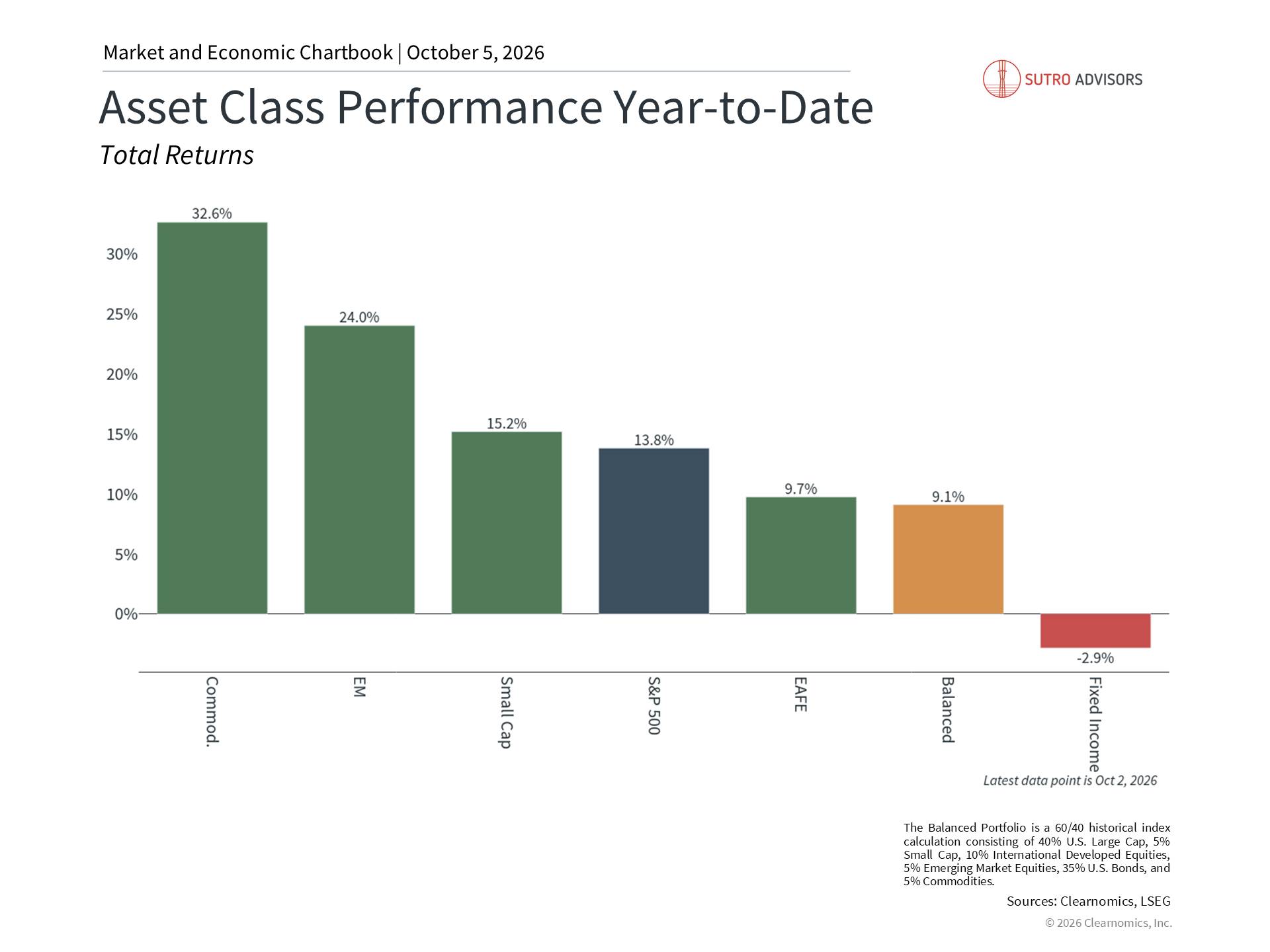
The S&P 500 gained 2.3% during the third quarter, including dividends, while the Nasdaq rose 2.6%. The Dow was the laggard, falling 2.3%.
Year to date, the S&P 500 is up 12.7% and the Nasdaq has gained 16.1%.
Bonds had a tougher quarter. The Bloomberg U.S. Aggregate Bond Index fell 3.5% as the 10-year Treasury yield climbed to 5.29%, its highest level in about 20 years.
Meanwhile, commodities had a terrific quarter, gaining 15.1%, helped by rising energy prices. Brent crude finished September around $103 per barrel.
In other words, different parts of the market were doing very different things at exactly the same time.
Pretty normal, actually.
Rates Are High. That’s Not Entirely Bad News.
For much of my career, falling interest rates were simply part of the investing landscape.
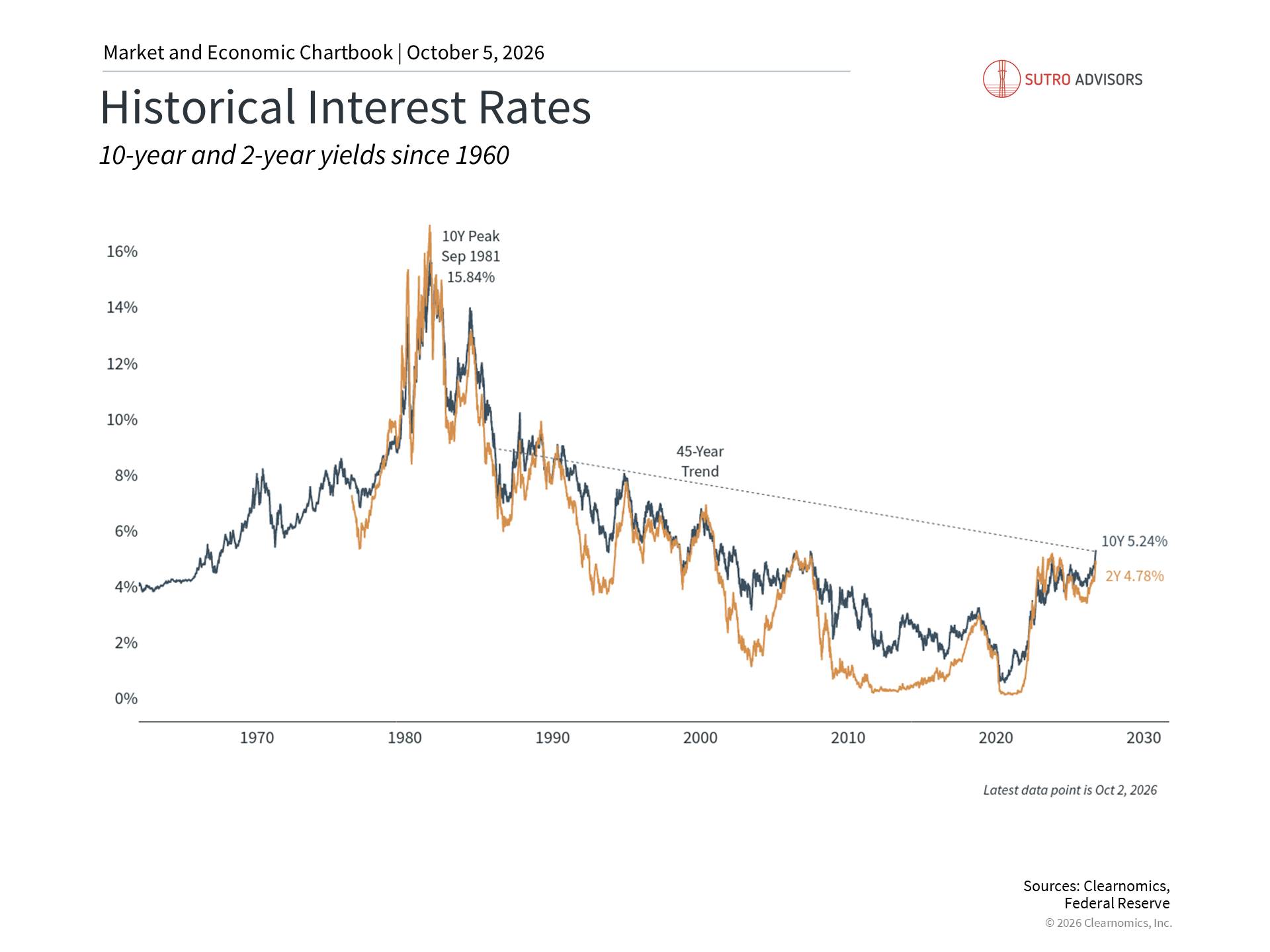
From the early 1980s through 2020, rates generally moved lower over time. Eventually we arrived in the near-zero-rate world following the pandemic.
That world is gone.
The 10-year Treasury ended the quarter above 5% and mortgage rates have moved back above 7%.
Obviously, that creates challenges.
Borrowing is more expensive. Housing affordability gets tougher. Companies face a higher cost of capital.
But there’s another side to the story.
Bonds are actually paying investors meaningful income again.
For years, fixed income was mostly asked to provide stability. Today, it can provide stability and a pretty attractive yield.
That changes the math when we build portfolios.
Not exactly cocktail-party material, but useful nonetheless.
Yes, We’re Talking About Earnings Again
I tried not to.
It lasted about 90 seconds.
Because once again, earnings are an important part of the story.
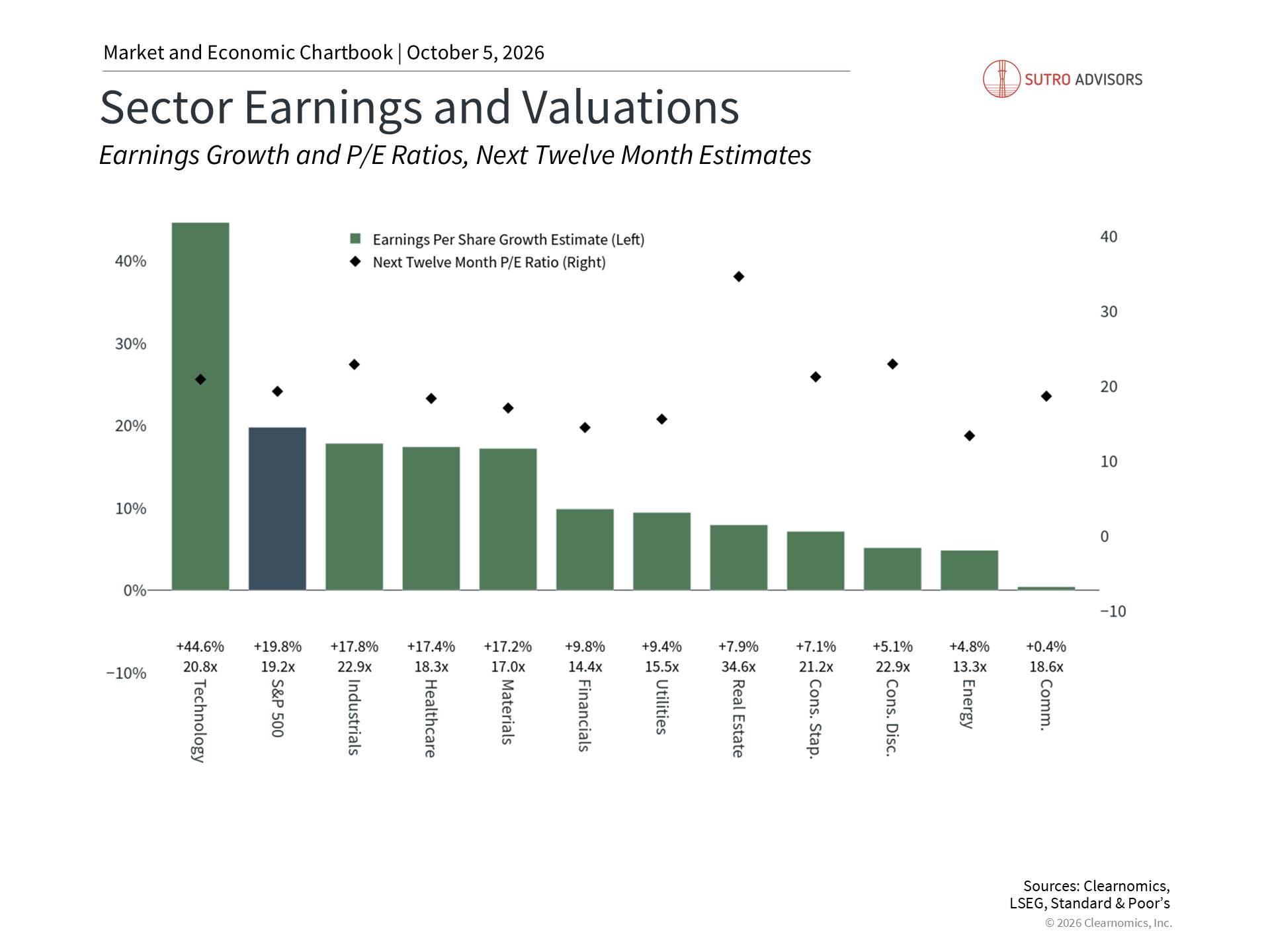
The major U.S. indexes reached new highs during the quarter while corporate profits remained strong. Current estimates in the research call for S&P 500 earnings to grow by more than 30% over the next 12 months.
And the strength hasn’t been limited to a handful of giant technology companies.
Energy has benefited from higher oil prices. Smaller companies participated in the gains. International semiconductor companies benefited from AI-related investment. Commodities contributed too.
That breadth matters.
Interest rates, inflation and whatever the Fed says at its next meeting will continue to dominate the headlines.
Underneath all of it, companies are still doing the thing that matters most to investors:
Making more money.
Broken record? Absolutely.
But at least it’s a pretty important record.
The Fed Finally Pulled the Trigger
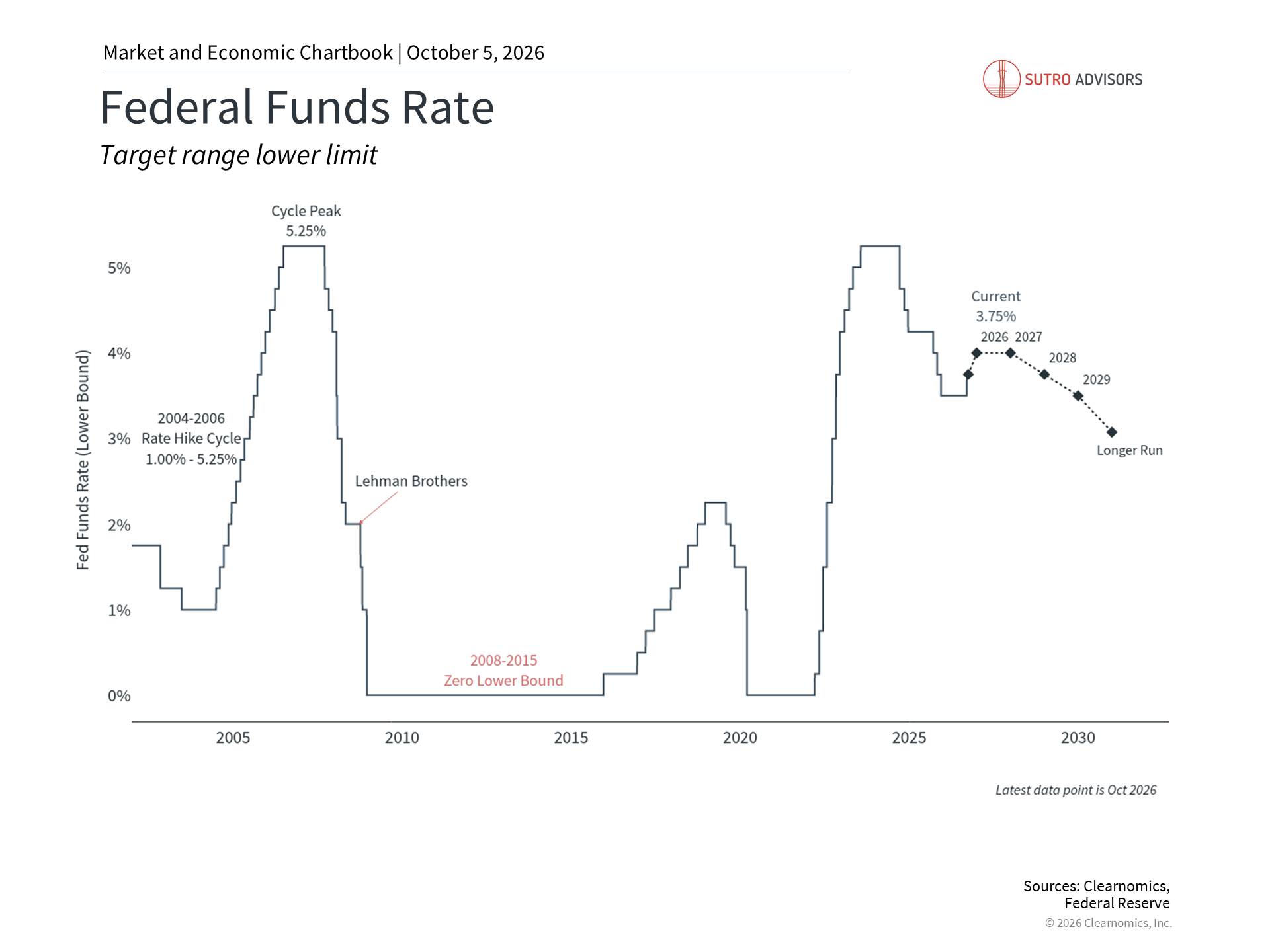
At its September meeting, the Federal Reserve raised its benchmark interest rate by a quarter point to 3.75%–4.00%.
It was the Fed’s first rate increase in three years.
And yes, inflation gets another appearance in The Broadcast.
Apparently the 2022 vintage still has some life left in it.
Headline CPI was running at 3.4% year over year in August. Core CPI was lower at 2.4%, while the Fed’s preferred core PCE measure remained at 3.0%.
Higher energy prices have complicated the picture further.
What I find interesting is how calmly markets handled the rate increase.
Part of the reason is that investors largely expected it.
That’s an important distinction.
Markets don’t simply react to whether news is “good” or “bad.” They react to how reality compares with expectations.
Sometimes the surprise matters more than the headline.
AI: From Spending Story to Productivity Story
Last month I wrote about using AI to “hire” an editor for this very newsletter.
That was my small-scale productivity example.
The much bigger question is what happens when millions of workers and thousands of businesses start doing some version of the same thing.
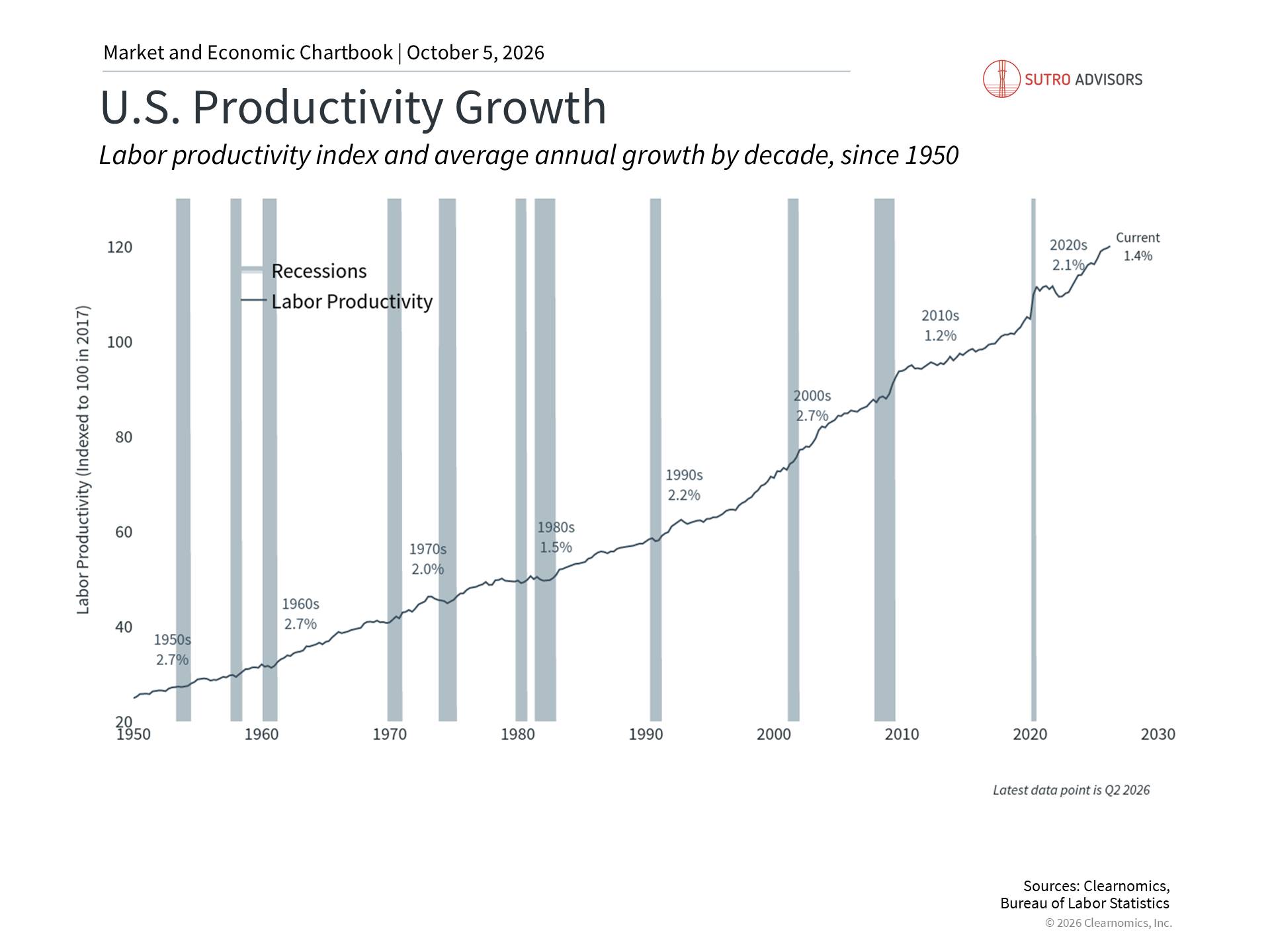
Productivity growth has averaged about 2.1% annually so far in the 2020s, compared with roughly 1.2% during the 2010s, according to the research.
Whether AI can sustain or improve that trend matters far more to me than which AI stock happens to be winning this month.
If companies can produce more with the same people, time and resources, that can eventually translate into higher profits, higher wages and stronger economic growth.
That’s the real promise of AI.
We’re still very early in figuring out how much of that promise becomes reality.
Election Season Is Coming
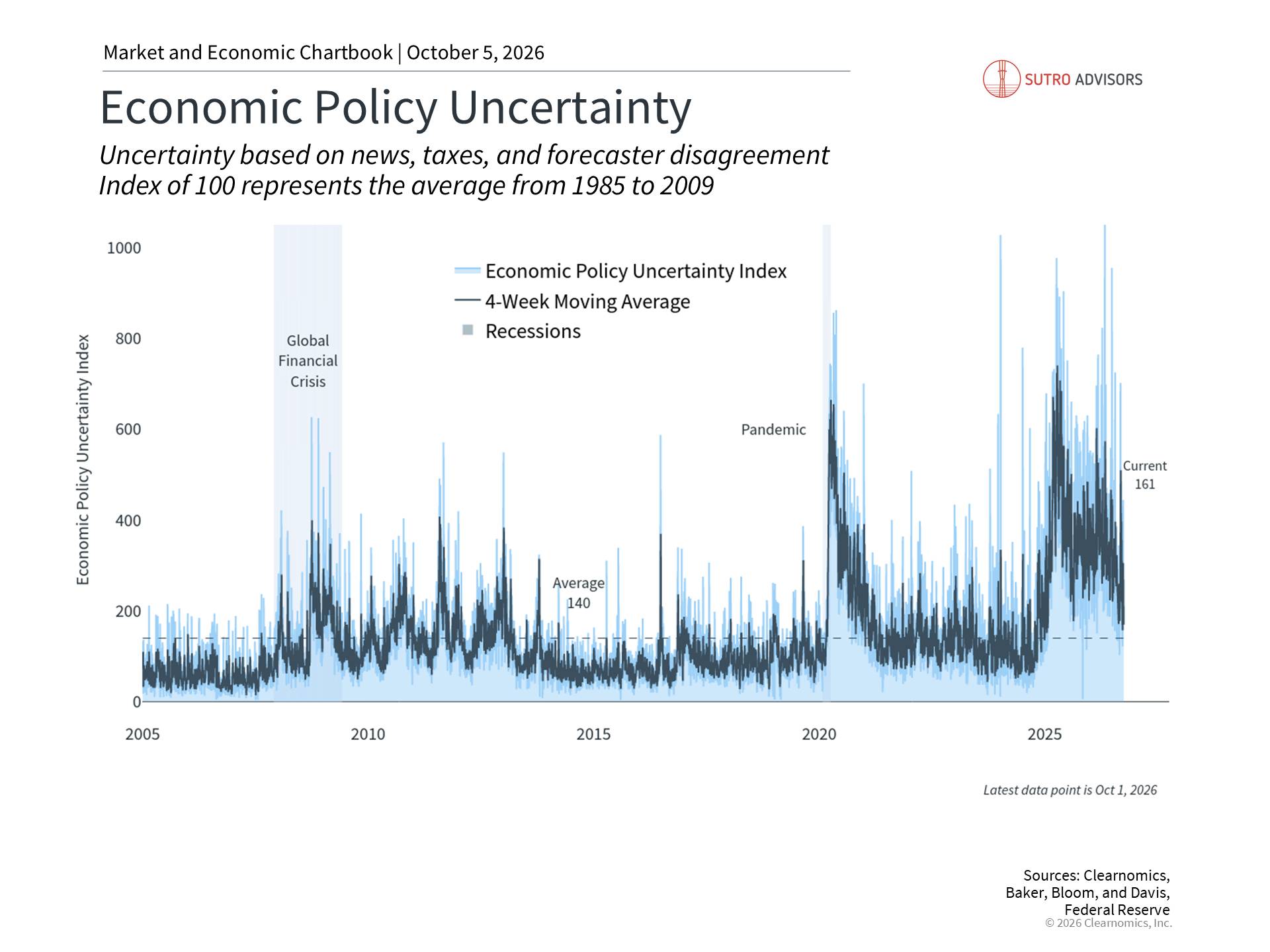
We are also heading into midterm election season. The next regularly scheduled federal general election is November 3, 2026.
Which means the volume is about to go up considerably.
Taxes, spending, deficits and regulation are legitimate policy issues, and election results can affect each of them.
But there’s an important distinction between having political opinions and turning those opinions into an investment strategy.
Your portfolio doesn’t get a vote.
I wouldn’t build one as though it does.
Congressional elections occur every two years. All 435 House seats are up for election and roughly one-third of the Senate is elected in each cycle.
Companies, meanwhile, still have to operate through whatever political environment voters produce. They sell products, hire people, adjust costs and adapt to new rules.
That’s where I’d rather keep the investment focus.
More Than One Thing Can Be True
I think that’s probably the most useful lesson from the third quarter.
Interest rates can be at 20-year highs and stocks can reach new highs.
Bonds can struggle and offer some of their best yields in years.
Oil can move above $100 and the economy can continue growing.
AI can create enormous uncertainty and potentially make businesses more productive.
Markets rarely give us one clean story.
Usually, several seemingly contradictory things are happening at the same time.
That doesn’t mean something is wrong.
That’s just how markets work.
Last month’s lesson was that markets don’t need perfect conditions to make progress.
The third quarter gave us another pretty good example.
Until next time, take good care!