Over the weekend, headlines got heavier.
The U.S. and Israel launched military strikes against Iran, targeting senior leadership, military infrastructure and nuclear facilities. Iran’s Supreme Leader has reportedly been killed. Iran responded with missile and drone attacks across the region. The stated objective of “Operation Epic Fury” is regime change in Tehran. Strikes are expected to continue and U.S. casualties have already been reported.
First and foremost, these events have real human consequences. The safety of civilians and U.S. service members matters far more than market moves.
Still, as investors, it’s natural to ask:
What does this mean for markets?
For oil?
For my portfolio?
Let’s zoom out.
Conflict Is Tragic. It Is Also Not New.
The scale of the current strikes are significant. But tensions between the U.S., Israel and Iran have been building for decades.
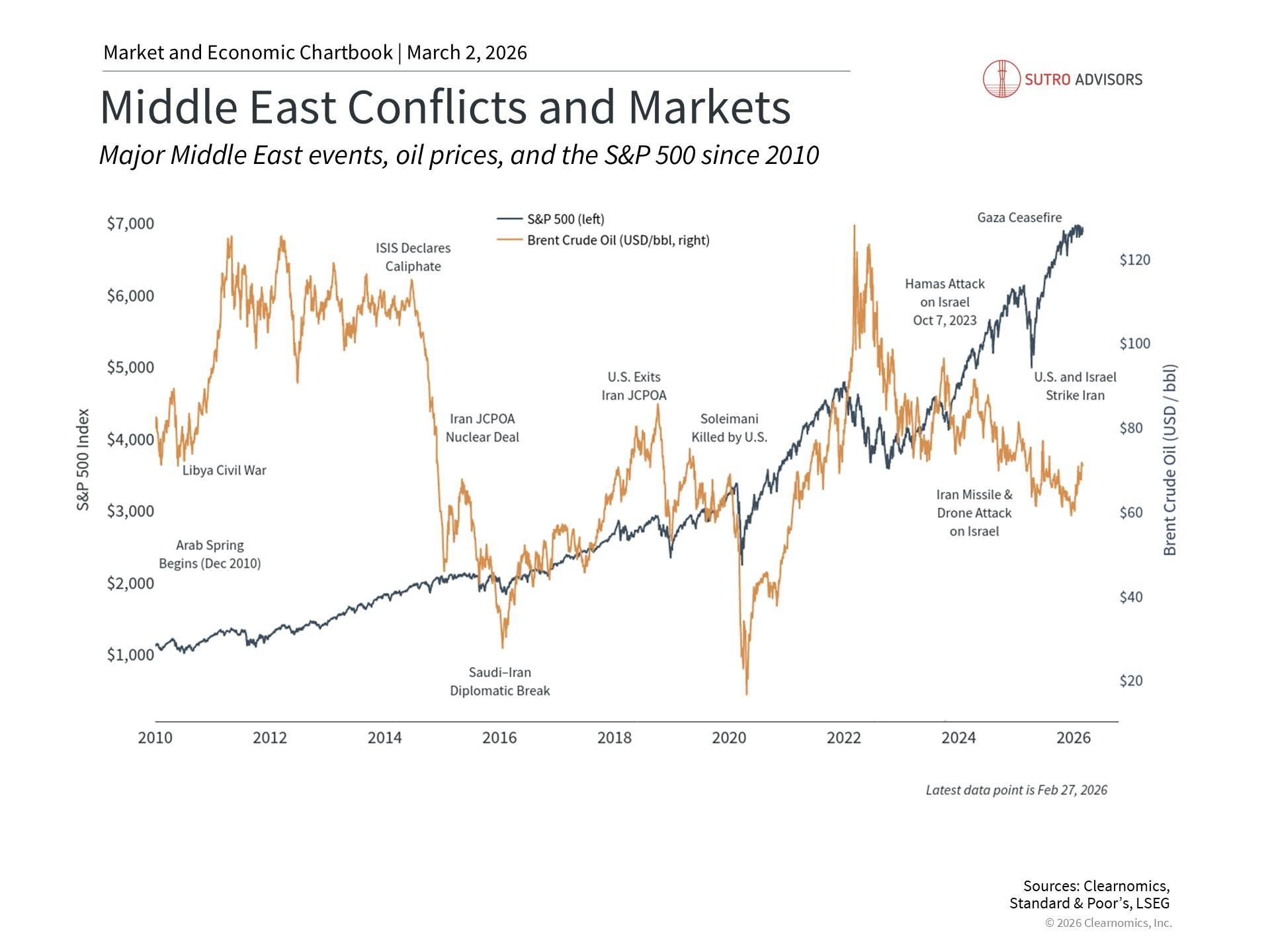
- Longstanding Iranian support of Hezbollah and Hamas
- The 2019 drone attacks on Saudi oil facilities
- The October 2023 Hamas attack on Israel
- Israel’s 12-day military campaign against Iran last summer
- Failed nuclear negotiations and a major U.S. military buildup in recent weeks
This is escalation. But it is escalation inside a long-running geopolitical story.
Markets have seen many chapters like this before.
Oil Is the Transmission Mechanism
When Middle East tensions rise, energy markets react first.
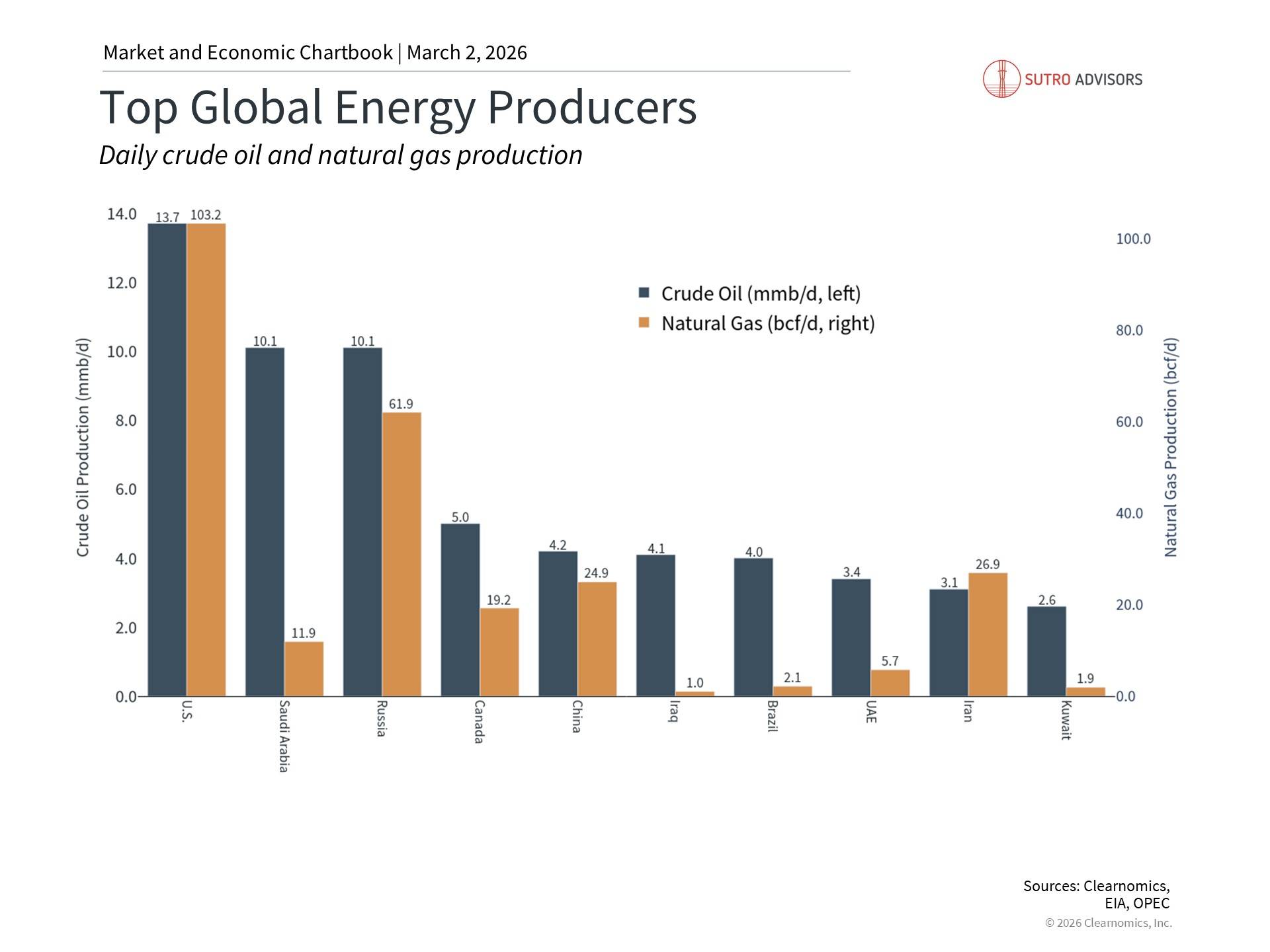
Iran produces roughly 3 million barrels of oil per day and sits alongside the Strait of Hormuz, through which about one-third of global seaborne oil passes. That’s why oil moved higher. WTI climbed into the low $70s. Brent approached $80.
Now some perspective:
- Oil hit nearly $128 in 2022 after Russia invaded Ukraine.
- The U.S. is now the world’s largest oil and natural gas producer.
Energy matters. But the U.S. economy today is far less exposed to foreign supply shocks than it was decades ago.
And oil prices have a long history of making confident forecasts look foolish.
What History Actually Says About Markets and War
Here’s the pattern.
Markets wobble at the onset of conflict. Volatility spikes. The news cycle turns relentless.
Then markets refocus on fundamentals.
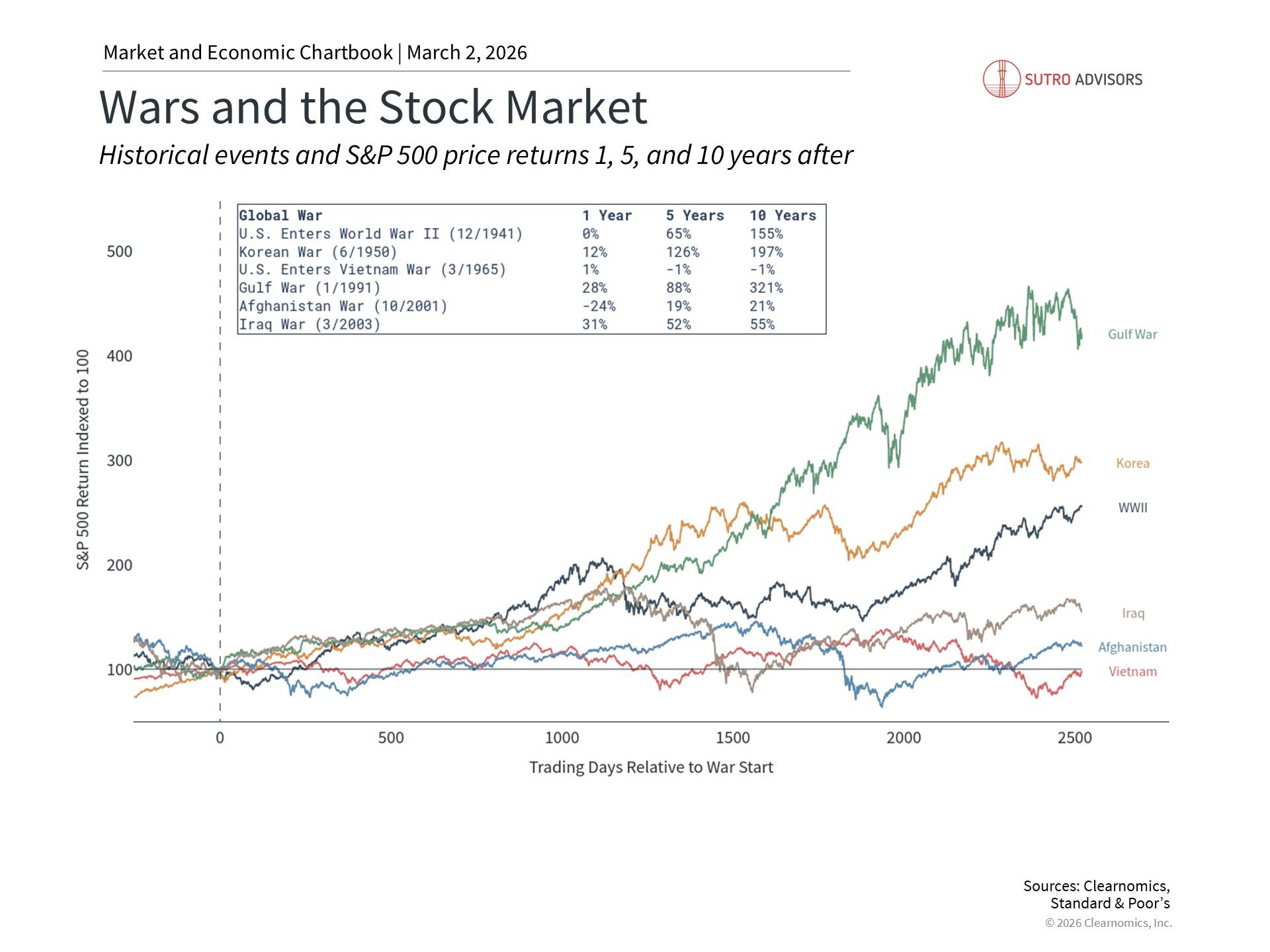
World War II. The Gulf War. Iraq. Afghanistan. Russia-Ukraine. In each case there was turbulence. Sometimes sharp. But when you step back one year, three years, five years out, returns were often positive. Frequently meaningfully positive.
Why?
Because markets are ultimately driven by earnings, productivity, innovation and capital allocation — not by headlines alone.
Another nuance: markets are forward-looking. By the time events feel most chaotic in the news, markets have often already repriced the risk. And once uncertainty begins to narrow — even if headlines remain uncomfortable — markets frequently stabilize before the news improves.
Geopolitical shocks feel like permanent turning points.
For diversified investors, they rarely are..
Direct Exposure Is Minimal
Another important point from the report: Iran has been under heavy sanctions for years. Very few portfolios have any meaningful direct exposure
So the real market variable here is not “Iran.” It’s oil, sentiment and uncertainty.
Those can create volatility. They do not automatically derail long-term financial plans.
The Real Risk
The real risk during moments like this isn’t oil.
It’s behavior.
Headlines trigger fear. Fear tempts action. Action at the wrong time is what historically damages returns.
Markets can rebound quickly and unexpectedly. Missing even a handful of the best days meaningfully reduces long-term results
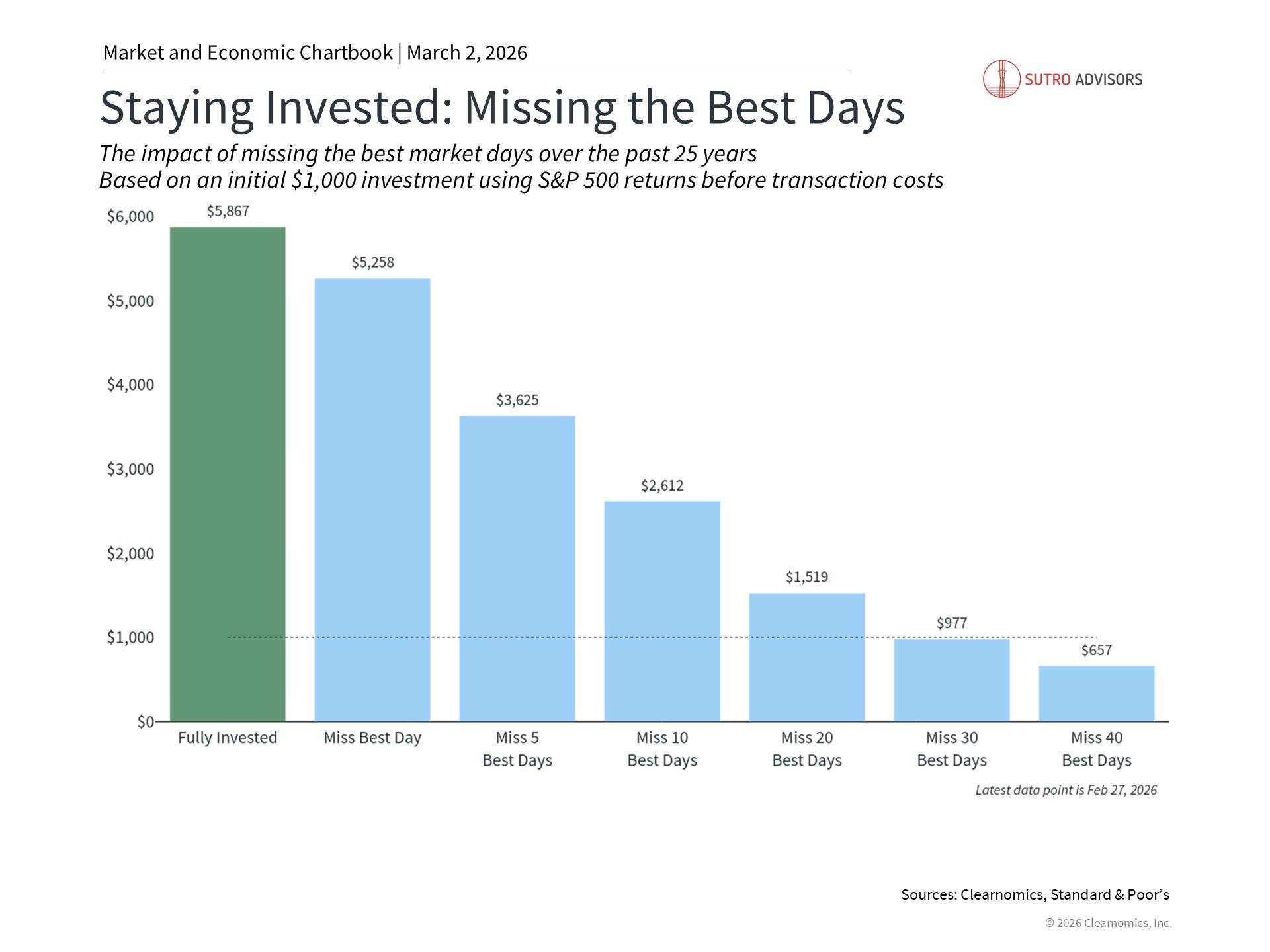
This is where discipline matters more than prediction.
Plans vs. Planning
Dwight Eisenhower once said, “Plans are worthless, but planning is everything.”
Geopolitical events are unpredictable. The fact that they happen is not.
Your portfolio is designed to absorb uncertainty. Diversification is not built for calm periods. It is built for moments exactly like this.
If oil rises further, markets may wobble. If escalation expands, volatility could increase.
But long-term returns are driven by earnings growth, innovation and economic expansion — not by trying to outguess the next headline.
Bottom Line
This is a serious geopolitical development.
It is not a reason to abandon a long-term strategy.
History shows that investors who remain diversified and aligned with their goals are best positioned to navigate periods of uncertainty
As always, if you’d like to talk through your portfolio, your allocation or just how you’re feeling about all of this, I’m here.
I hope you’ve found this Special Edition of The Broadcast helpful.
If something materially changes, I’ll be back in your inbox with another update. Otherwise, keep an eye out for my February recap — including a few thoughts on last month’s AI freakout.
Until next time, take good care,